

In this article
The “aha!” moment: a personal discovery of ad magic
I have spent 30+ years working in digital marketing and content strategy, so for an ad to grab my attention is a very rare occurence. And yet, it did happen a few Sundays ago, I was sitting with my wife Denise, watching one of our favourite TV series. Halfway through, the ad break appeared and on came something I had never seen before.
Within moments I was bursting with laughter. By the end, I was scrambling to find out how I had managed to miss it.
That campaign was Hellmann’s “Sweet Sandwich Time”, a fever dream of sequined brilliance featuring the unforgettable “Meal Diamond.”
If you have not caught it, the premise is simple.
A character called Meal Diamond, played with full method-acting commitment by Andy Samberg, appears in a diner and launches into Neil Diamond’s “Sweet Caroline”, except the lyrics have been twisted into “Sweet Sandwich Time.”
By the time the crowd joins in on the “so good, so good, so good” chorus, you are grinning. It is Weird Al Yankovic territory for a new generation, and it is absolute genius.
The advert was released in the US in January as part of Super Bowl LX, where a 30-second window commanded between $8 million and $10 million. Six months later, people are still talking about it. That sort of longevity in a fragmented media world is rare. I’ve never stopped thinking about it, I guess because this goes beyond being just another commercial, it’s about a brand creating a cultural moment by prioritising joy.
Intrigued by both its impact and the fact that I missed it altogether, I spent hours researching and reading about the Meal Diamond phenomenon. It’s been fun and fascinating in equal measure, and below here are five insights for marketing leaders out there.
Insight 1: AI-heavy ads flopped. Human storytelling didn’t.
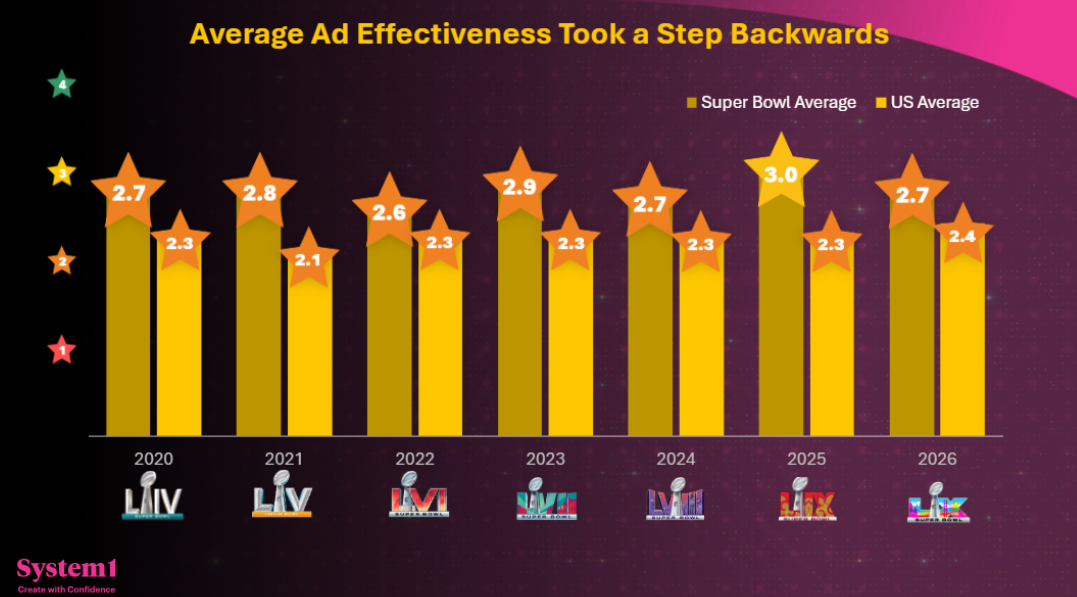
The 2026 Big Game was a testing ground for the executive teams experimenting with replacing human creativity with prompt engineering.
Around 18% of the broadcast featured AI-centric messaging, and the data from System1’s “Test Your Ad” database (system1group.com) tells a cautionary tale: tech-heavy ads largely alienated the audience, averaging a dismal 2.1 Stars and feeling cold and confusing to the very consumers they aimed to impress.
In contrast, Hellmann’s human-centric storytelling landed a 4.1-Star rating, firmly in the “Strong” brand-building category.
While the Big Game average dipped to 2.7 Stars (down from the previous year’s 3.0), Hellmann’s seem to thrive by ignoring the tech hype entirely.
The failure of the tech-heavy spots came down to a lack of emotional resonance. As Jon Evans, Chief Customer Officer at System1, said in the campaign debrief they published:
“Most of these ads lacked storytelling, a character to root for and clarity on who the ad was for… [Top advertisers] are well versed in tried-and-true effectiveness principles like narratives featuring real people, humor and distinctive brand cues.”
The data reveals a massive perception gap between what Silicon Valley sells and what people actually want to watch.
Insight 2: Bonkers beats polished. Every single time.

To cut through the noise, Hellmann’s enlisted director Tom Kuntz (MJZ), the creative behind iconic spots for Old Spice and Instacart. Kuntz helped Samberg transform into Meal Diamond, a sequin-clad parody grounded in a masterstroke of tragicomic lore: born in a deli, possessing no knowledge of his parents, and believing his best friend is a piece of bologna.
This surreal backstory (including a “curse” that could only be broken by a marriage proposal rejected by Elle Fanning) resonated with a generation raised on self-aware memes. By making the character “terrifyingly bonkers” rather than polished, the brand bypassed generational boundaries and traditional advertising tropes entirely.
Samberg, who had avoided Super Bowl commercials for years, described his mission with characteristic wit: he had been asked to “take part in singing the sandwich gospel atop the highest peak of all monoculture” and there was only one answer.
Personally, I would have loved to have been present during the pitch, can you imagine some of the faces around the room as the concept is being described?
For certain, the lesson here is not about absurdism for its own sake, it is really about ingenuity meets conviction. After all, polished and safe gets scrolled past., but fully committed and gloriously odd gets talked about for over six months.
Insight 3: Don’t just broadcast. Give people something to do.
Hellmann’s understood that an $8 million broadcast spot is only a starting point. The broadcast is the invitation, not the party. Hellmann’s understood this better than almost anyone in the 2026 game, and they built an ecosystem around Meal Diamond that gave fans somewhere to go once the ad ended.
To drive actual physical sales, they constructed a “phygital” ecosystem that moved beyond passive viewing and gave fans tangible ways to participate in the Meal Diamond reality.
1. The Jimmy John’s “Meal Diamond Deal” ran from February 2 to 22. Fans could order a Ham and Three Cheese Melt toasted with Hellmann’s, translating a fictional on-screen sandwich into a tangible retail product.
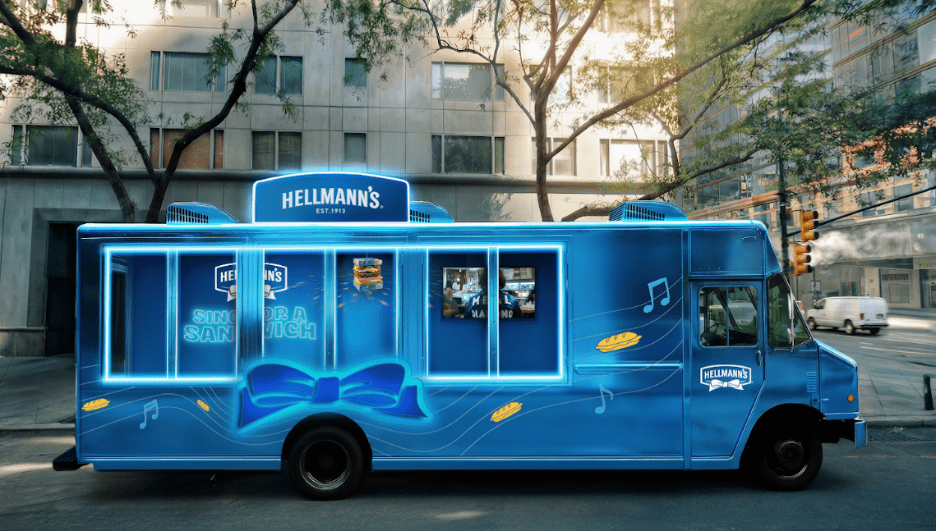
2. The NYC “Sing for a Sandwich” pop-up placed a branded karaoke truck at 57th and 8th in Manhattan, inviting fans to perform for a free meal and generating localised social content with high-energy real-world engagement.
3. The Amazon Fire TV “Mayo for a Melody” application built by Amazon Ads Brand Innovation Lab, invited fans to sing along to “Sweet Sandwich Time” from their couches and unlock an instant 15% discount on Hellmann’s products.
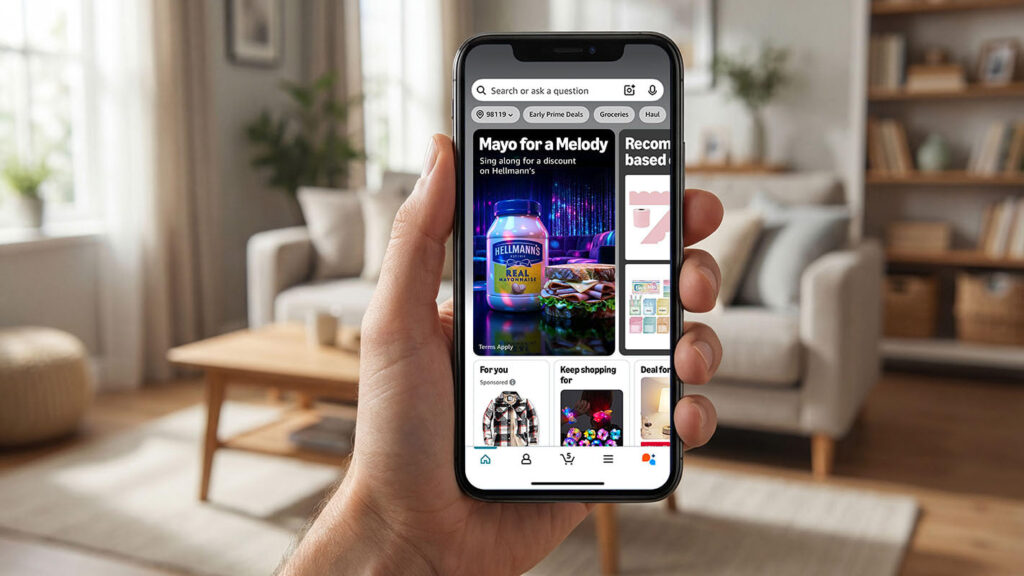
According to Amazon’s own case study, shoppers exposed to the karaoke experience alongside additional formats saw a 96% increase in conversion rates compared to single-format exposure, with those reached through three or more touchpoints seeing conversion climb 5.2 times.
And by the way, the numbers confirm it: year-on-year Hellmann’s sales climbed 26.6% in February 2026, the month the campaign ran its course. When you give people a reason to join in rather than just watch, they reward you with their wallets as well as their attention.
Insight 4: Know when to entertain and when to educate. This was not the moment for a lesson.
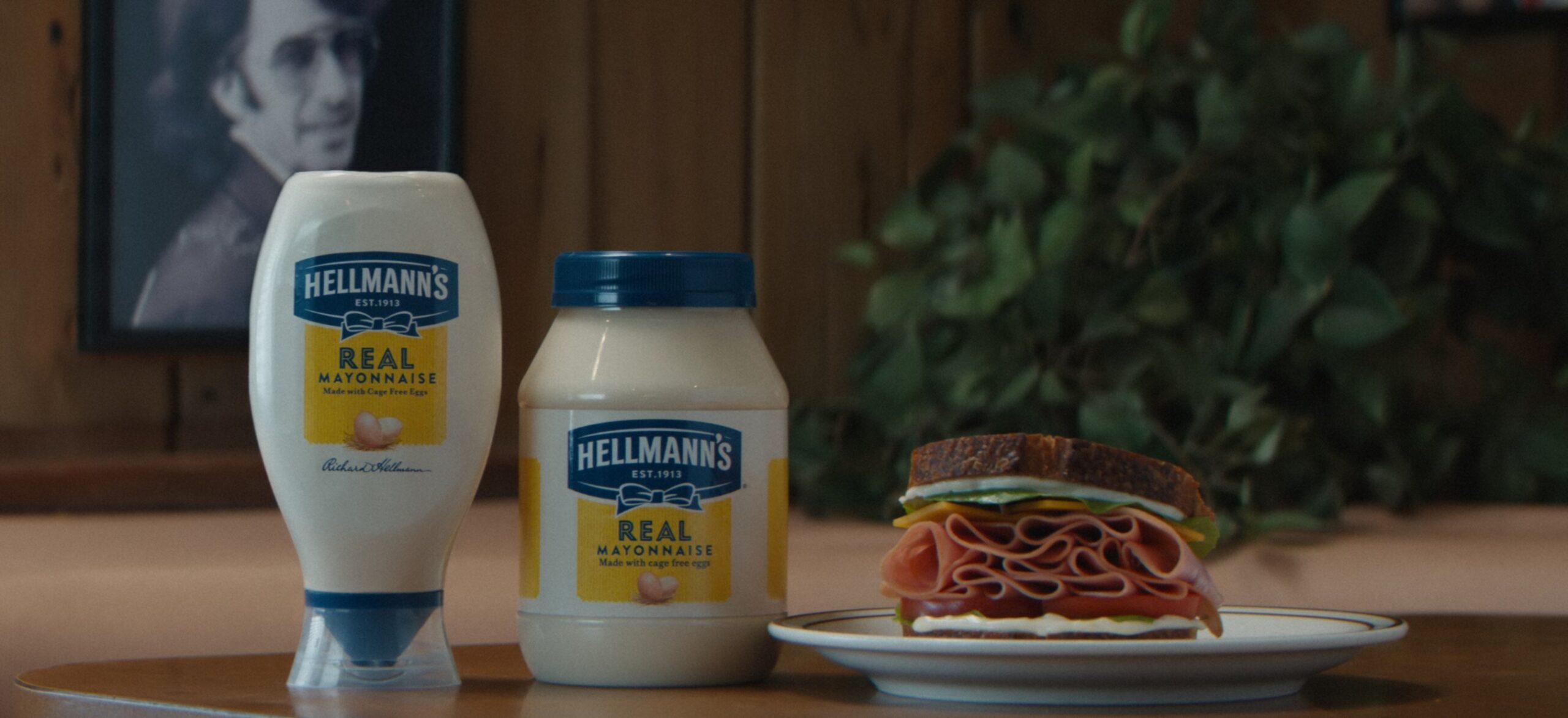
I have a lot of respect for the “Make Taste, Not Waste” platform that Hellmann’s ran for years at the Super Bowl. It was purposeful, it was consistent, and it used star power well.
But by the sixth year, something had shifted. Purpose fatigue is real challenge, and on this occasion the brand read it correctly.
By recognising that the Super Bowl crowd in 2026 did not need educating but needed a laugh and a tune they could not shake, and by prioritising humour over a factual message, Hellmann’s maximised the one thing the Big Game still delivers that almost nothing else can: a shared moment in a fragmented world.
What I find genuinely smart about this decision is what happened to the purpose work. It was not dropped; it was given a new form of expression.
While the world sang along with Samberg, Hellmann’s partnered with the Food Recovery Network in the Bay Area to redistribute surplus game-day food.
The values were intact and simply placed where they would land rather than where they would be lost. That distinction matters, and it is one more marketing leaders should reflect on more often.
Insight 5: Nostalgia isn’t backward-looking. It’s the most cross-generational tool you have.

One of the cleverest aspects of the strategy was the choice of “Sweet Caroline”, a song that functions as a sporting national anthem here in the UK. Since Euro 2020, the track has been the unofficial anthem for England’s men’s and women’s football teams and a staple at global cricket and darts tournaments.
With the 2026 FIFA World Cup now well underway at this time of writing this article, this campaign has a perhaps unexpected yet significant second life on our side of the Atlantic.
The inclusion of food critic Keith Lee also signals a sharp understanding of Gen Z relevance and modern food culture. By pairing a classic tune with a modern comedian and a viral food icon, Hellmann’s created a borderless piece of creative.
I keep hearing nervous marketers say they dare not reach for eighties or nineties references because it will alienate younger audiences.
With respect, that is nonsense. Look at what Stranger Things did for Kate Bush’s “Running Up That Hill”, sending a forty-year-old track back to number one and introducing her to a brand-new audience. Young people are discovering older culture in droves, watching reaction videos to Freddie Mercury at Live Aid and Phil Collins’s drum fill in “In the Air Tonight.”
Used well, nostalgia is the most cross-generational tool in the marketing kit.
For six years on Two Geeks and a Marketing Podcast with Roger Edwards, we have banged this same drum. Combine clear communication, real audience understanding, and a clever play on nostalgia, and you have a winner. By selecting an asset with massive search and karaoke volume, Hellmann’s ensured long-term brand memory well beyond the final whistle.
The long game of a single sandwich

Hellmann’s “Meal Diamond” campaign finished as a top ten Super Bowl ad according to System1’s post-game rankings, with a strong 4.1-Star rating in a year of declining averages. It proved that when a brand combines clear communication, absurdist humour, and a genuine understanding of its audience, it creates something sustainable.
There is a bigger point to be made here too.
The news at the moment is, frankly, a bit grim, and people are feeling it. In conditions like these, the boardroom instinct is to slash communications budgets and hunker down.
I would argue the opposite. When audiences are weary, the brands that lift the mood, that make people smile, laugh even, and hand them a moment of shared joy, are the brands that earn loyalty for years afterwards.
Over six months of cultural traction from a single Super Bowl spot is the kind of return that should make any board think twice before swinging the axe at the comms budget.
This is a theme I have been writing and speaking about consistently, including most recently in my column for Northern Insight magazine. As you look at your next high-stakes campaign, consider the balance between noise and emotion.
Are you simply buying a fleeting moment of attention, or are you earning a permanent place in your audience’s mental playlist?
Hellmann’s, with one sandwich and a familiar tune, have shown us what the answer looks like. And right now, we could all do with the lift.
Who would have thought that we could learn so much from a campaign that was, by any measure, so good, so good, so good.
To Your Success!
Pascal
About the author
Pascal Fintoni is Managing Director of ArcLight Marketing & Media Ltd, with 30+ years of experience in digital marketing and business development. In February 2023 he introduced AI into all his training and consultancy services, and has since delivered executive briefings, hosted AI conferences, and facilitated dedicated AI masterclasses to small businesses across the UK. He is a podcast and video producer, and the author of WebProud: The 5-Step Roadmap to Feeling Proud of Your Website.
References and further reading
AI killed Big Game ad effectiveness: human-centric stories won the night — Business Wire
America’s favorite Super Bowl LX ads — System1 Group
Andy Samberg is Meal Diamond for Hellmann’s in SB60 — Muse by Clios
Andy Samberg turns Hellmann’s Sweet Sandwich Time into a Big Game hit — DesignRush
Find out which Super Bowl spots are resonating before the game — Reel 360
Five methodologies, five winners: what Super Bowl success actually means — BlueOcean
Hellmann’s: Meal Diamond (official ad) — YouTube
Hellmann’s hits a high note with Sweet Sandwich Time — PR Newswire
Hellmann’s hits a high note with Sweet Sandwich Time in Big Game ad — VML
Hellmann’s introduces Meal Diamond in Big Game teaser — PR Newswire
Sweet Sandwich Time campaign overview — VML
Hellmann’s: Meal Diamond — Sweet Sandwich Time — Ads of the World
It’s Sweet Sandwich Time for Hellmann’s and Meal Diamond — Reel 360
Super Bowl 2026 data — Marketing Charts
Super Bowl LX: the $8 million ad slot spectacle — Elasticity
VML and Hellmann’s reimagine the Sweet Caroline flash mob — The Stable
The five best Super Bowl LX ads — Jelly Digital
The best and worst Super Bowl 2026 ads, ranked and reviewed — The Independent
Why Andy Samberg thought his 2026 Super Bowl debut was perfect — Screen Rant
Why consistency wins the Big Game — System1 Group