
In this article
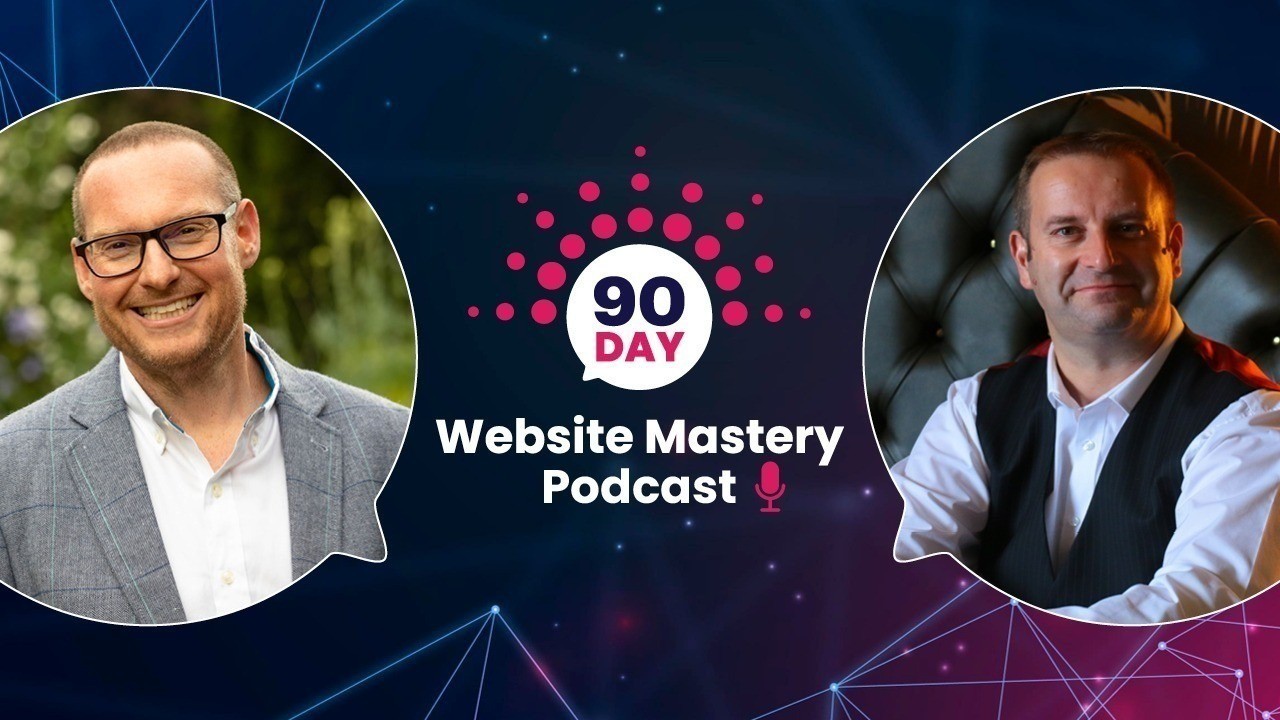
Each time we go live for another episode of the 90-Day Website Mastery Podcast, Jonny Ross and I answer questions about website management, SEO, and content creation in our popular podcast segment “You Ask, We Answer.”
In this article, I thought I would summarise and compile our responses to a fascinating question from our recent episode that clearly struck a nerve with many professional service providers and B2B marketers:
“I’ve written my case studies using a combination of my own thoughts and AI support, but I’m stuck on the visuals and photography. I can’t use photos of my clients, their premises, or their logos. What should I do?”
This practical question reflects an everyday challenge that business owners, marketers, and content creators face when trying to build credibility whilst respecting client confidentiality.
I hope you enjoy this repurposing and resharing of our discussion, thank you to my digital assistant AI-LEEN, and feel free to send us your questions for our next podcast episodes!
To your success.
Pascal
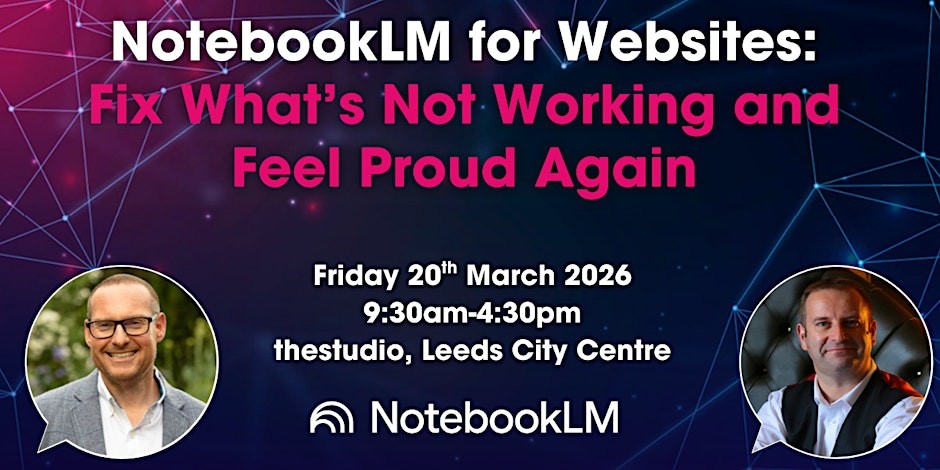
PS: did you know that Jonny and I are hosting an in-person even in Leeds on the 20th of March?
Entitled ‘NotebookLM for Websites’, it’s a hands-on day using NotebookLM (one of Google’s most overlooked AI tools) to identify what’s confusing or undermining trust, then building a practical 90-day website action plan.
Intrigued? You can find out more here: https://www.eventbrite.com/e/notebooklm-for-websites-fix-whats-not-working-and-feel-proud-again-tickets-1980110576036?
PPS: And yes, creating case studies and case stories will be covered too!
Now back to the article…

This brilliant question came from a participant in one of my recent webinars, and it’s one that Jonny had encountered just the day before we recorded. Stars aligning, as he put it.
The challenge is real: You’ve delivered exceptional results for your clients. You want to share those success stories to build trust with prospects. But you can’t use client photographs, you can’t display their logos, and in many cases, you can’t even mention their company names due to commercial sensitivity or confidentiality agreements.
Most marketers and business owners see this as a limitation. We see it as an opportunity, in fact one that actually forces you to become a better storyteller and build deeper trust.
Why Constraints Create Better Case Studies
Here’s Jonny’s counterintuitive insight: When you can use a client’s logo, you’re often relying on borrowed credibility to tell the story and build trust. That reliance doesn’t make you work as hard as you should.
Without the crutch of brand recognition, you’re forced to:
- Be genuinely generous in what you share
- Dig deeper into the actual impact and difference you made
- Explain your process and thinking in detail
- Demonstrate your methodology through clear examples
This isn’t a weakness, it’s a strength that positions you as a trusted adviser who respects confidentiality whilst still proving expertise.
Introducing the "Case Story" Framework
During our conversation, I found myself inventing a new term in the moment: case story.
Why? Because I think what people need to understand is that storytelling is actually made up of two words: story and telling. The story is the structure around what you observed, why it happened, and what was done about it. The telling is the format you choose: words, images, videos, sounds that becomes the vehicle for your message.
A case story asks a fundamental question: What is the lesson, and what do you want people to remember?
This shifts your mindset from “How do I fill this template?” to “What transformation occurred, and how do I make that memorable?”
There are two approaches to case stories:
- Retelling something that happened in the recent past with an actual client
- Showing an example of what could happen if you’re a start-up or launching a new offering for example
Either way, you’re inviting your audience to think more creatively about case studies, making them more engaging and liberating you from the shackles of having to exactly match visuals to your client’s building, logo, or location.
The Three-Part Structure That Always Works
We broke down the classic case study structure beautifully. If you simplify it right down, every compelling case story needs:
1. The Problem: What challenge did the client face?
2. The Solution: What was your unique process, thinking, or approach?
3. The Impact: What measurable difference did you make?
But here’s the key: When you reach “the impact,” you don’t stop at the first answer. You need to keep asking “So what?”
- “We implemented this solution.” → So what?
- “It improved efficiency by 15%.” → So what?
- “That freed up three hours per day for the leadership team.” → So what?
- “Which allowed them to focus on strategic growth and secure two new contracts worth £200K.” → Now we’re talking.
Keep asking “so what?” until you reach the numbers, the transformation, the real human impact. Those are the details that build trust and demonstrate you’re data-led.
Note: I sometimes use the “which means that…” technique to remind myself about telling the full story.
Visual Solutions: From Literal to Lateral
Now, about those visuals you’re stuck on.
What NOT to Do: Don’t just jump to generic stock photography, i.e. two people shaking hands, a laptop on a pristine desk with a coffee cup. As I joked during our discussion, those desks are far too neat. My desk is a horror, and it would never match those photos online!
What TO Do Instead:
1. Data Visualisation Create charts and graphs that show impact without revealing sensitive information:
- “Reduced staff turnover by 20%” (shown as a before/after graph)
- Percentage improvements rather than absolute revenue figures
- Visual progress indicators demonstrating transformation
2. Process Illustrations & Roadmaps: Show your unique methodology visually:
- “We considered three different approaches to this project…”
- Create a visual roadmap showing decision points
- Illustrate why you chose one route over another
- Demonstrate the thinking that led to the successful outcome
3. Industry Context Through Illustration: Think conceptually rather than literally. Jonny gave brilliant examples:
- Logistics client? Use something resembling a London Tube map to convey interconnected systems
- Finance client? Grids, structural precision, numbers presented elegantly
- Manufacturing client? Systems, geometry, process flows
This is what I used to call “lateral” versus “literal” when I taught visual marketing. You can either match the photography literally to the organisation, or you can go lateral by using illustration, metaphor, and conceptual imagery that echoes the key lesson.
4. Professional Photography Platforms Move away from typical stock photography and explore platforms where professional photographers gift their work to small business owners. These offer authentic, high-quality images that don’t feel staged or generic.
5. AI-Generated Visuals With AI tools readily available, you can create custom illustrations that echo and whisper the key lesson from your case story—without needing to photograph actual client premises or people.
Handling Client Anonymity: Turn It Into Trust
Finally, what about those client names you can’t mention?
Jonny’s insight here was powerful: Not putting the company name is actually a strength, not a weakness.
It’s an opportunity to position yourself as a safe space, a trusted partner who respects commercial sensitivity. Consider using language like:
This statement immediately signals discretion and professionalism. But—and this is crucial—you must anchor that statement with credible detail that doesn’t give the client away:
- “An £80 million business in the manufacturing sector covering three world markets”
- “A fast-growth fintech startup with 150+ employees across Europe”
- “An award-winning professional services firm operating in the legal sector”
This level of detail:
- Shows you work with substantial, credible clients
- Demonstrates respect for confidentiality
- Builds trust on multiple layers
- Proves you understand their world
As Jonny concluded: “I don’t think this is a problem. I think actually there’s a massive opportunity.”
Our Key Recommendations:
✅ Reframe constraints as creative opportunities that force deeper, more generous storytelling
✅ Shift from “case studies” to “case stories” – focus on the lesson and what you want remembered
✅ Use the three-part structure: Problem → Solution → Impact (and keep asking “so what?” until you reach real transformation)
✅ Replace literal photography with lateral thinking: data visualisation, process roadmaps, industry-specific illustrations, AI-generated imagery
✅ Choose between literal and lateral visuals: match the organisation directly, or use conceptual imagery that echoes the key message
✅ Turn client anonymity into a trust signal by stating “commercial sensitivity” and backing it with credible, non-identifying details
✅ Be data-led: Use charts, graphs, and percentage improvements to demonstrate impact visually
✅ Show your unique process: Create visual roadmaps of your decision-making and methodology
✅ Remember: words are powerful – calling it a “case story” invites more creative, engaging thinking

Some Final Thoughts
As professional service providers, we’re often working with clients who value discretion. This shouldn’t limit our ability to demonstrate expertise, it should inspire us to tell better stories.
The transformation in a case story isn’t yours; it belongs to your client. Your job is to illuminate that transformation in a way that makes prospects say, “I want that outcome too.”
When you embrace case stories over traditional case studies, you free yourself to be more generous with process, more creative with visuals, and more trustworthy with client relationships.
That’s not just good marketing. That’s building a business people are proud to work with.
And remember…
- Jonny Ross
- Pascal Fintoni
Listen to the full discussion on Episode 53 of the 90-Day Website Mastery Podcast. Have a question for our “You Ask, We Answer” segment? Get in touch with me here on LinkedIn or visit 90daymarketingmastery.com
#CaseStudies #ContentMarketing #DigitalMarketing #Storytelling #WebsiteStrategy #MarketingStrategy